
Fruitful DakotaU-Pick Farm Find Us
← All our fruit

Haskap (Honeyberries)

a.k.a. haskap

Haskap is our star berry and the fruit we grow the most of. It's the first berry of summer, and one handful usually turns first-timers into regulars.

  • SeasonLate June – mid July
  • FlavorBlueberry meets raspberry and black currant
  • Best forFresh eating, jam, pie and smoothies
Get to know it

What is it, anyway?

Haskap (say HASS-cap) is a kind of edible honeysuckle. It grows wild across the far north, from Siberia to Japan to northern Canada. The name comes from the Ainu people of northern Japan. You'll also hear it called honeyberry or blue honeysuckle.

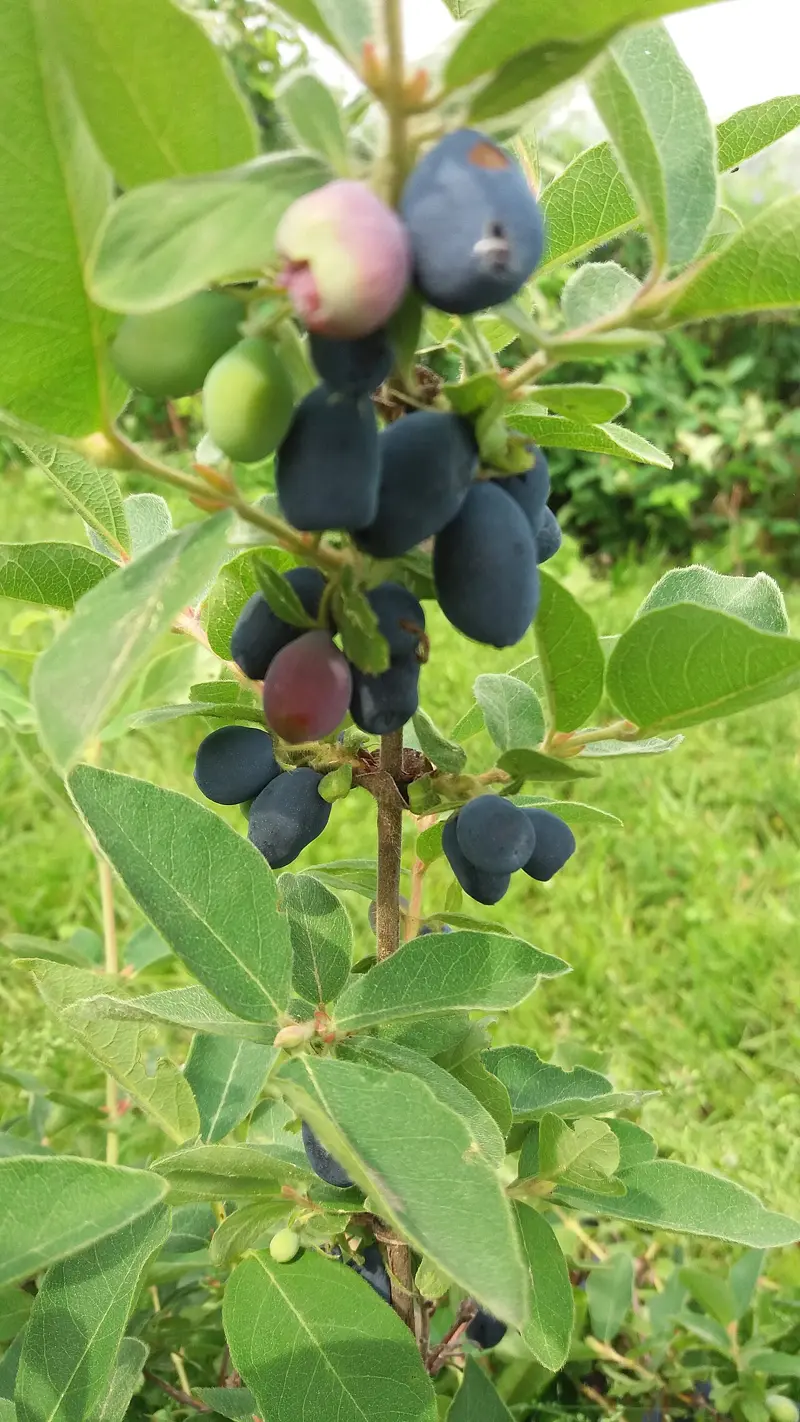
The berries are long and oval, about the size of a big blueberry, with a dusty blue skin. Bite into one and it's deep purple all the way through. The skin is thin, and the seeds are so small you'll never notice them.

Much of the modern haskap breeding happened just north of us at the University of Saskatchewan. The bushes are tough as nails. They handle forty below, and the blossoms can even shrug off a spring frost. That's why NDSU recommends them for folks who can't grow blueberries in our alkaline prairie soil.

Tasty and good for you

Health benefits

  • Packed with antioxidantsHaskap is loaded with anthocyanins, the purple plant compounds that give it that deep color. Studies have found it can have even more of them than blueberries.
  • Vitamin CA serving of haskap gives you a nice boost of vitamin C for your immune system and skin.
  • Fiber and potassiumLike other berries, haskap brings fiber for digestion and potassium for heart health.
  • Easy to loveThey're naturally low in calories, and kids love them. That makes it easy to eat more fruit.

This is general nutrition info, not medical advice. Talk to your doctor about your own diet.

From our kitchen to yours

Favorite recipes

Easy Haskap Jam

Haskap makes a gorgeous, deep purple jam that sets up nicely without store-bought pectin.

About 3 half-pint jars

You'll need

  • 4 cups haskap berries, fresh or frozen
  • 2 ½ cups sugar
  • 2 tablespoons lemon juice

How to make it

  1. Put a small plate in the freezer. You'll use it to test the jam.
  2. Mash the berries in a large, heavy pot. Leave some chunks if you like.
  3. Stir in the sugar and lemon juice. Bring to a hard boil over medium-high heat, stirring often.
  4. Boil about 8 to 12 minutes, stirring constantly, until it thickens.
  5. Test it: drop a spoonful on the cold plate and wait 30 seconds. If it wrinkles when you push it, it's done.
  6. Ladle into clean jars. Keep in the fridge for up to 3 weeks, or freeze for up to a year.

Tip: Want it on the shelf? Process the jars in a water bath canner for 10 minutes, following NDSU Extension canning guidelines.

Haskap Crumble Bars

A buttery shortbread crust, a jammy haskap middle and a crumbly top. They travel great to the lake.

24 bars

You'll need

  • 3 cups flour
  • 1 cup sugar
  • 1 teaspoon baking powder
  • ¼ teaspoon salt
  • 1 cup cold butter, cubed
  • 1 egg
  • Zest of 1 lemon
  • Filling: 4 cups haskap berries
  • ½ cup sugar
  • 4 teaspoons cornstarch
  • 1 tablespoon lemon juice

How to make it

  1. Heat the oven to 375°F and grease a 9×13 pan.
  2. Mix the flour, 1 cup sugar, baking powder and salt. Cut in the butter, then stir in the egg and zest until it's crumbly.
  3. Press two-thirds of the crumbs firmly into the pan.
  4. Gently stir the berries with ½ cup sugar, cornstarch and lemon juice. Spread over the crust.
  5. Crumble the rest of the dough over the top.
  6. Bake 40 to 45 minutes, until lightly golden. Cool completely before cutting.

Tip: Frozen haskap works too. Toss them with the sugar and cornstarch while they're still frozen.

Picking & storage tips

  • Ripe haskap is purple inside, not green. Squish one to check, and taste it. If it's sour, give it a few more days.
  • Hold a container under the branch and give it a gentle shake. Ripe berries drop right in.
  • Haskap is softer than a blueberry, so use shallow containers.
  • Freeze them on a sheet pan and then bag them. They don't clump and they keep for a year.
Come pick your own

Is it ready yet?

The typical season is Late June – mid July, but Dakota weather likes to keep us guessing. We post what's picking, times and prices on our Facebook page first.