
Fruitful DakotaU-Pick Farm Find Us
← All our fruit

Black Currants

Bold & tangy

Rich, tart and bursting with flavor. Black currants are a big deal in Europe, and once you try homemade black currant jam, you'll see why.

  • SeasonMid – late July
  • FlavorBold, tart, rich and a little musky
  • Best forJam, jelly, syrup and sauces
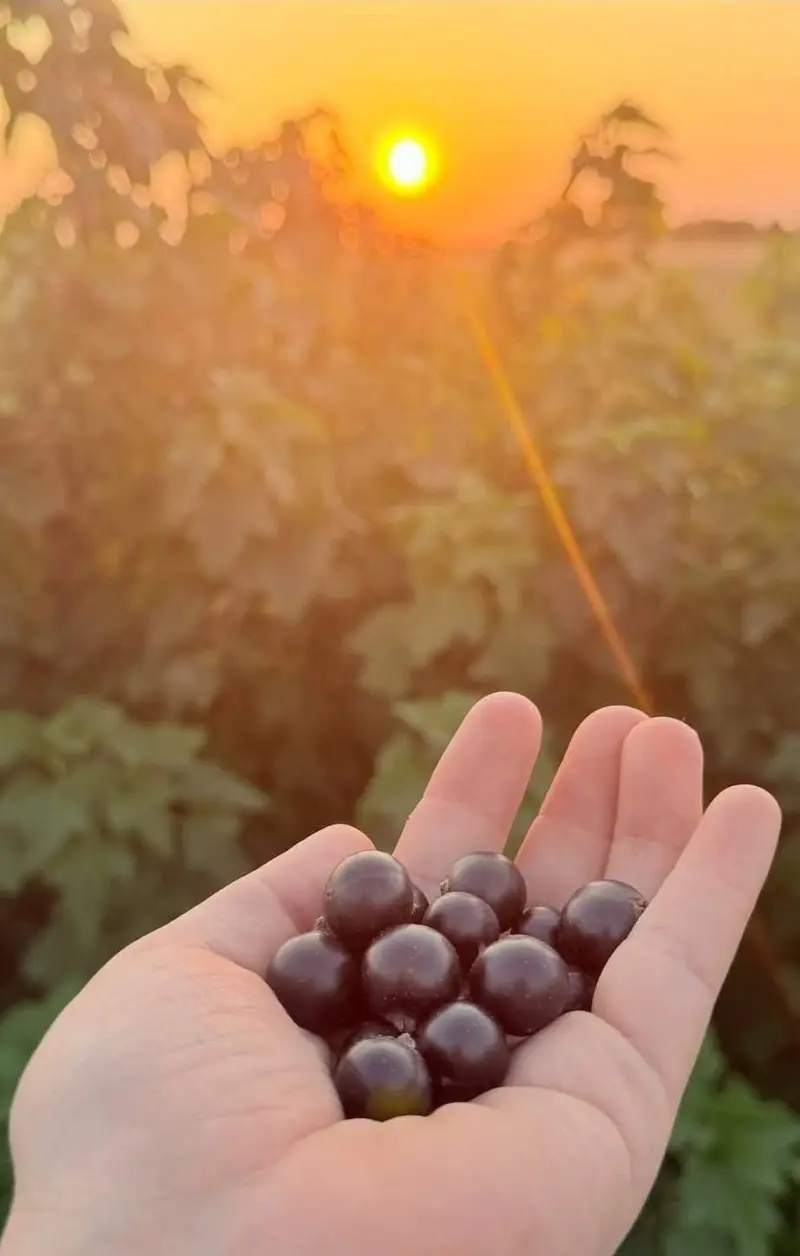
A handful of ripe black currants held up against a golden sunset over the fruit rows
Black currants from our own bushes
Get to know it

What is it, anyway?

Black currants are small, shiny, nearly black berries that grow in clusters on hardy bushes. Even the leaves smell like currant when you brush past them.

They're a huge favorite in England and across Europe, where they go into jam, juice, cordials and the French liqueur crème de cassis. Here in the US, they were banned in many states for decades because they can carry a disease that hurts white pine trees. That's why so many Americans have never tasted one.

Fresh off the bush they're pretty tart, and some folks love them that way. But cook them with a little sugar and the flavor turns deep, rich and jammy.

Tasty and good for you

Health benefits

  • A vitamin C powerhouseBlack currants have more than three times the vitamin C of an orange. A single cup gives you more than twice your daily need.
  • Rich in anthocyaninsThe dark skins are full of these antioxidants, which have been studied for eye health and circulation.
  • Potassium and fiberThey're a good source of potassium, which is good for your heart, and they bring fiber for digestion.
  • Iron helperAll that vitamin C helps your body absorb iron from other foods at the same meal.

This is general nutrition info, not medical advice. Talk to your doctor about your own diet.

From our kitchen to yours

Favorite recipes

Black Currant Jam

Currants are full of natural pectin, so this jam sets up without any help. It tastes like summer on toast.

About 4 half-pint jars

You'll need

  • 4 cups black currants, stems removed
  • 1 ½ cups water
  • 4 cups sugar

How to make it

  1. Put a small plate in the freezer for testing.
  2. Simmer the currants in the water for 15 to 20 minutes, until the skins are soft. Don't skip this step, because sugar toughens the skins.
  3. Add the sugar and stir until it dissolves.
  4. Bring to a hard rolling boil and boil 5 to 8 minutes, stirring often.
  5. Test a spoonful on the cold plate. If it wrinkles when you push it, it's ready.
  6. Ladle into clean jars. Refrigerate for up to 3 weeks, freeze, or water-bath can following NDSU Extension guidelines.

Tip: No need to pull every tiny stem. The little dried flower ends on the bottom of each berry are fine to leave.

Black Currant Cordial

A sweet-tart syrup you mix with sparkling water. It's like homemade Ribena.

About 3 cups

You'll need

  • 4 cups black currants
  • 2 cups water
  • About 1 ½ cups sugar
  • Juice of 1 lemon

How to make it

  1. Simmer the currants and water for 10 minutes, mashing them as they soften.
  2. Strain through a fine sieve or cheesecloth. Measure the juice.
  3. Return it to the pot and add ¾ cup sugar for every cup of juice, plus the lemon juice.
  4. Heat just until the sugar dissolves. Don't boil.
  5. Cool, bottle and refrigerate for up to 3 weeks.
  6. Mix about 1 part cordial with 4 parts sparkling water, cold water or lemonade.

Tip: Freeze some in ice cube trays and drop a cube into iced tea.

Picking & storage tips

  • Pick whole clusters (called strigs) by the stem. It's much faster than picking berries one at a time.
  • Ripe currants are glossy and fully black, with no red showing.
  • They're firmer than most berries and hold up well in a pail.
  • To stem a big batch, freeze them first. The stems snap right off.
Come pick your own

Is it ready yet?

The typical season is Mid – late July, but Dakota weather likes to keep us guessing. We post what's picking, times and prices on our Facebook page first.